
01
More than a book of punishment
Popular summaries sometimes present the Garuda Purana as a catalogue of frightening punishments. The wider tradition is more complex, including cosmology, ethics, ritual, devotion and paths toward liberation. Afterlife imagery makes moral consequence vivid, but fear is not the only purpose of the text.
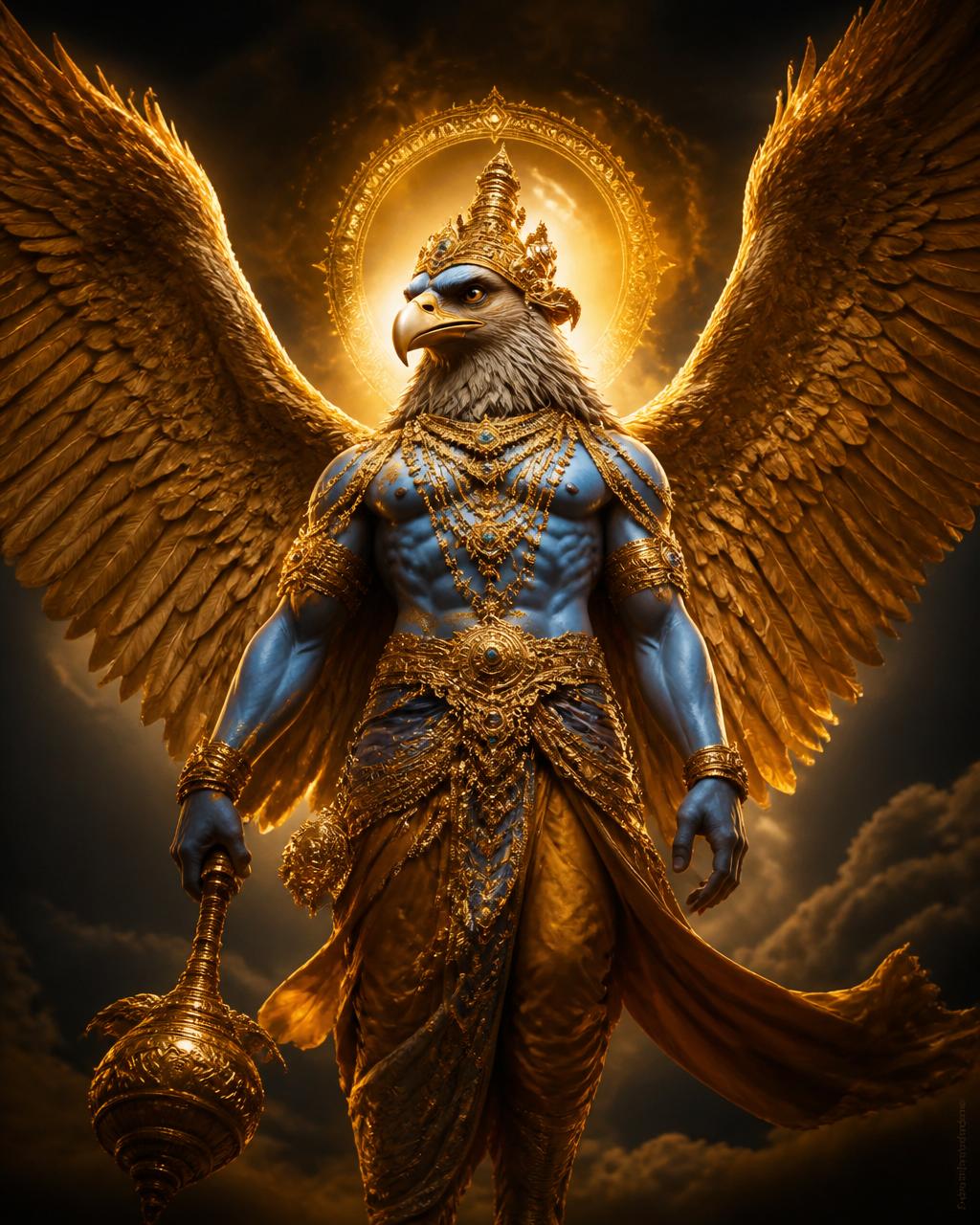
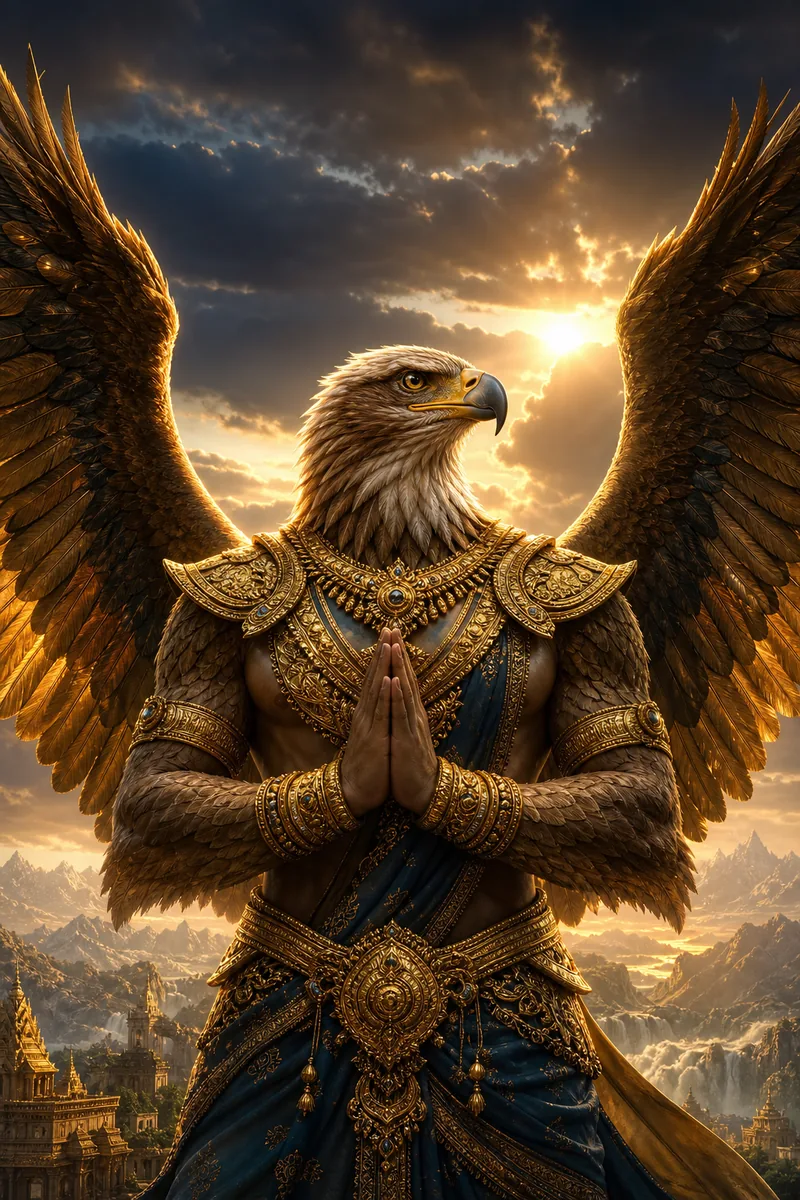
The narrative setting is a dialogue associated with Garuda and Vishnu. Questions about death become a way of asking how life should be lived, what actions leave behind and how remembrance connects generations.
02
The preta journey and the role of the living
Accounts commonly associated with the Preta Khanda describe an intermediate journey after death. Funeral rites, offerings and pindadana are presented as part of the family's duty and the continuing relationship between the living and the departed.
These descriptions are not uniform instructions for every family. Practice depends on community, lineage, region and teacher. Anyone making real ritual decisions should consult an appropriate priest or knowledgeable elder rather than relying only on an online summary.
03
Karma, Yama and the purpose of remembrance
Yama's realm expresses moral accountability: actions matter, intention matters and life is not isolated from consequence. Yet Hindu traditions also place these accounts beside devotion, knowledge, compassion and liberation. The afterlife story therefore directs attention back to the quality of the life being lived now.