
01
From ancestral king to judge
Early Vedic hymns remember Yama in connection with the ancestors and the road taken by mortals. Later literature develops the image of a ruler whose court evaluates action. These layers show a figure whose meaning grows across centuries rather than a character with only one fixed biography.
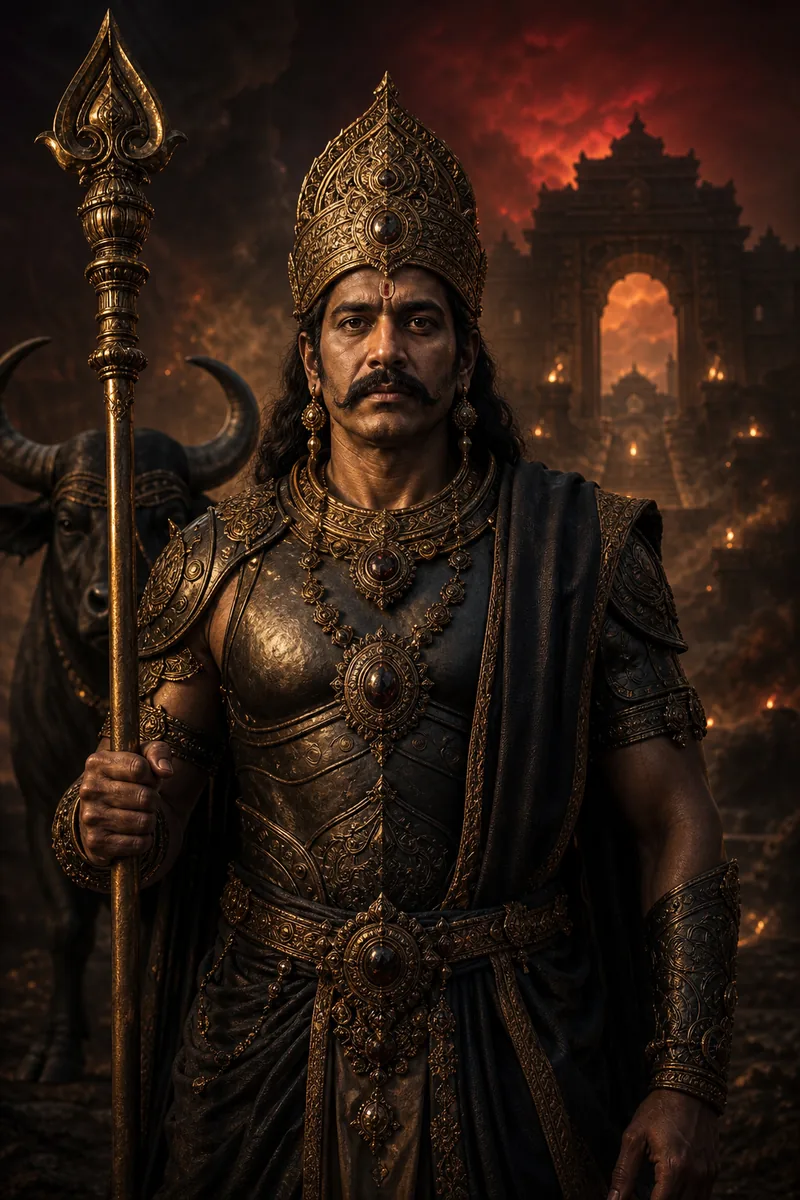
As Dharmaraja, Yama represents order and consequence. His authority is frightening because death removes worldly privilege, but it is also intelligible: conduct has weight, and judgment is not arbitrary appetite.
02
Yama in stories of testing
In the Katha Upanishad, the boy Nachiketa meets Yama and asks what remains after death. Yama becomes a teacher of self-knowledge rather than a monster. In the Mahabharata, Yudhishthira's connection with Dharma creates further stories in which wisdom and character are tested through difficult questions.
These narratives shift attention from fear of death to preparation for truth. The question becomes not only where a person goes, but what kind of understanding they have cultivated.
03
Why the distinction matters
Equating Yama with a Western devil distorts the tradition. Yama does not create evil or compete with the divine for souls. He belongs to a moral cosmos in which death, judgment, rebirth and liberation have distinct roles.