
01
The servant whose strength has a purpose
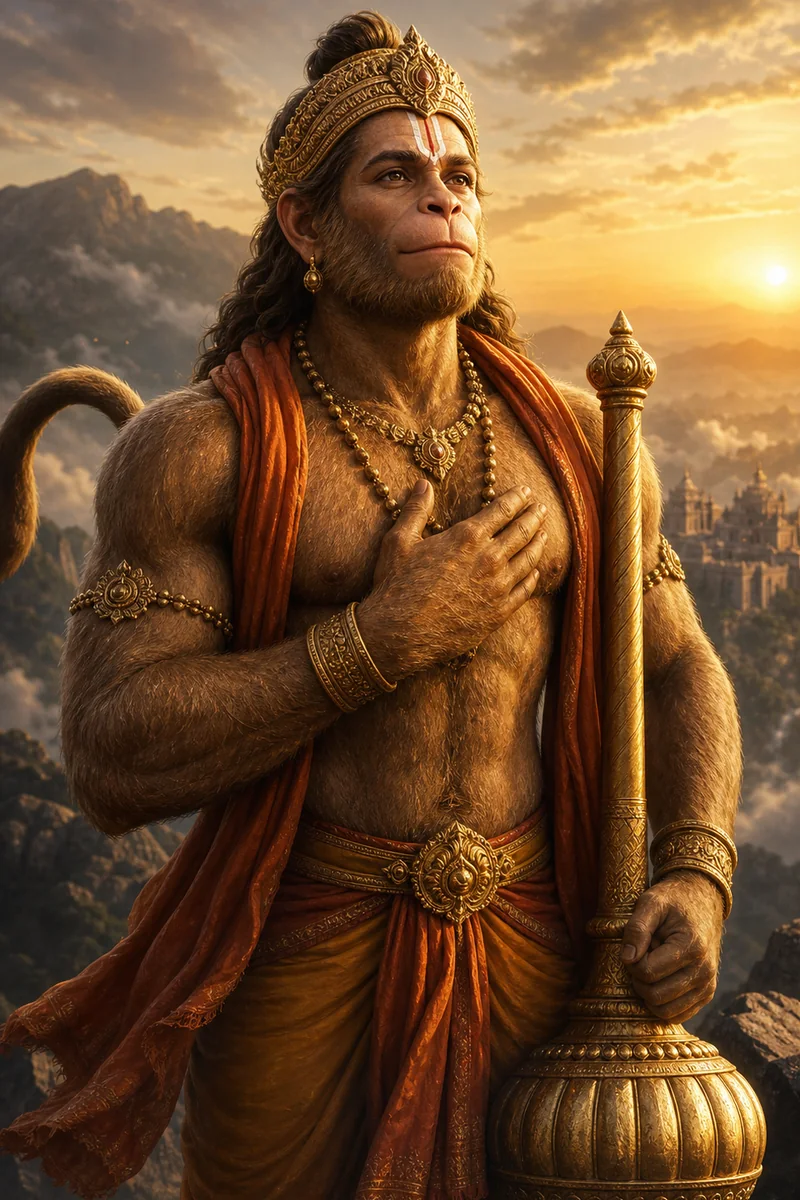
Hanuman's leap to Lanka, meeting with Sita and return with news are feats of physical and mental mastery. Yet he repeatedly directs achievement toward Rama's mission rather than personal glory. This makes him an image of power that remains accountable to love and duty.
Even the burning of Lanka follows capture, warning and confrontation. The episode is not random destruction but part of a larger struggle against Ravana's refusal to restore Sita.
02
The meeting with Bhima
In the Mahabharata, Bhima encounters an old monkey whose tail blocks his path. Unable to move it, the mighty Pandava learns humility before Hanuman reveals himself. Both are sons of Vayu in traditional genealogy, making the meeting one between brothers across ages.
Hanuman later promises his presence on Arjuna's banner. The Ramayana's servant-warrior thus becomes part of the Mahabharata's moral and symbolic landscape.
03
Why Hanuman remains present
As a Chiranjeevi, Hanuman represents devotion that does not expire when one epic ends. Temples, recitation and living practice continue to approach him as protector, source of courage and model of focused service.