
Floppy Fables
All Story Guides
Wonder and wisdom

Krishna Leela: The Meaning Behind the Divine Play

Krishna's leelas move from childhood mischief to cosmic revelation, from intimate friendship to political strategy. Leela means more than entertainment: it describes divine action that is free, purposeful and capable of revealing truth through wonder.

Manjunath Kuttappa · Founder & storyteller Last reviewed 21 July 2026 239 words

Leela

Divine play or purposeful action

Major source

Bhagavata Purana, Book Ten

Story settings

Gokula, Vrindavan, Mathura and Dvaraka

01

Why childhood stories matter

The child Krishna steals butter, dances, plays the flute and repeatedly protects his community. The stories create intimacy with the divine: the absolute can be loved as a child and friend, not approached only through distance and fear.

Episodes such as the vision of the universe in Krishna's mouth or the lifting of Govardhana allow ordinary village life to open into cosmic scale without losing warmth and humour.

02

Leela is not the absence of meaning

Calling an act leela does not mean that nothing matters. The tradition often uses play to show freedom from ordinary limitation while still protecting devotees and reordering a dangerous situation.

Different devotional traditions emphasize maternal love, friendship, romance, surrender or philosophical insight. No single short guide can exhaust those relationships.

03

From Vrindavan to the Mahabharata

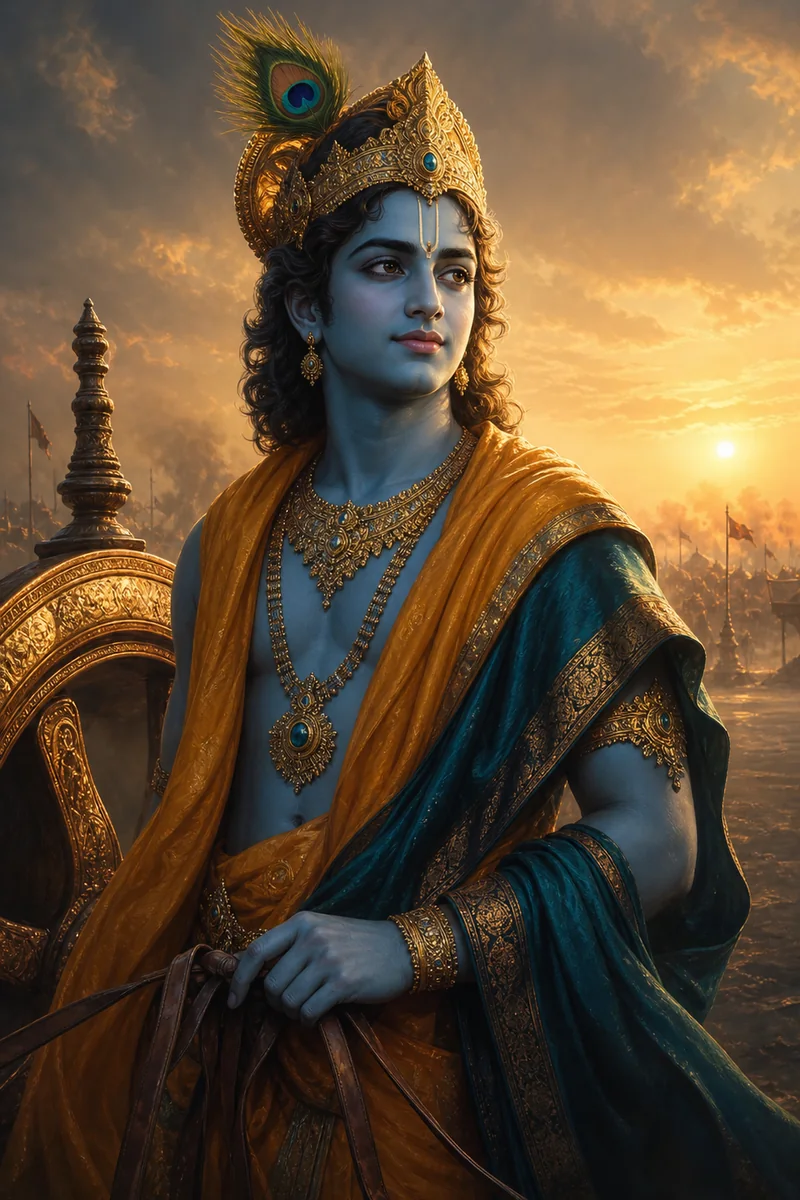
Krishna's later role as statesman, friend and charioteer belongs to the same life but a different narrative mood. The playful child and the teacher of the Bhagavad Gita together create a figure in whom intimacy and cosmic intelligence are not opposites.
Questions

Frequently asked

What does Krishna Leela mean?

It refers to Krishna's divine play—actions that express wonder, protection, love and spiritual meaning.

Where are Krishna's childhood stories told?

Many are told in the Bhagavata Purana, with important parallel traditions in the Harivamsa, Vishnu Purana and regional devotional literature.

Sources & tradition

What this guide draws from

Bhagavata Purana

Book Ten is a major source for Krishna's birth, childhood and Vrindavan traditions.

Parallel Krishna traditions

The Harivamsa, Vishnu Purana and regional bhakti literature preserve additional emphases and episodes.

Subscribe