
01
The sage belongs to the family
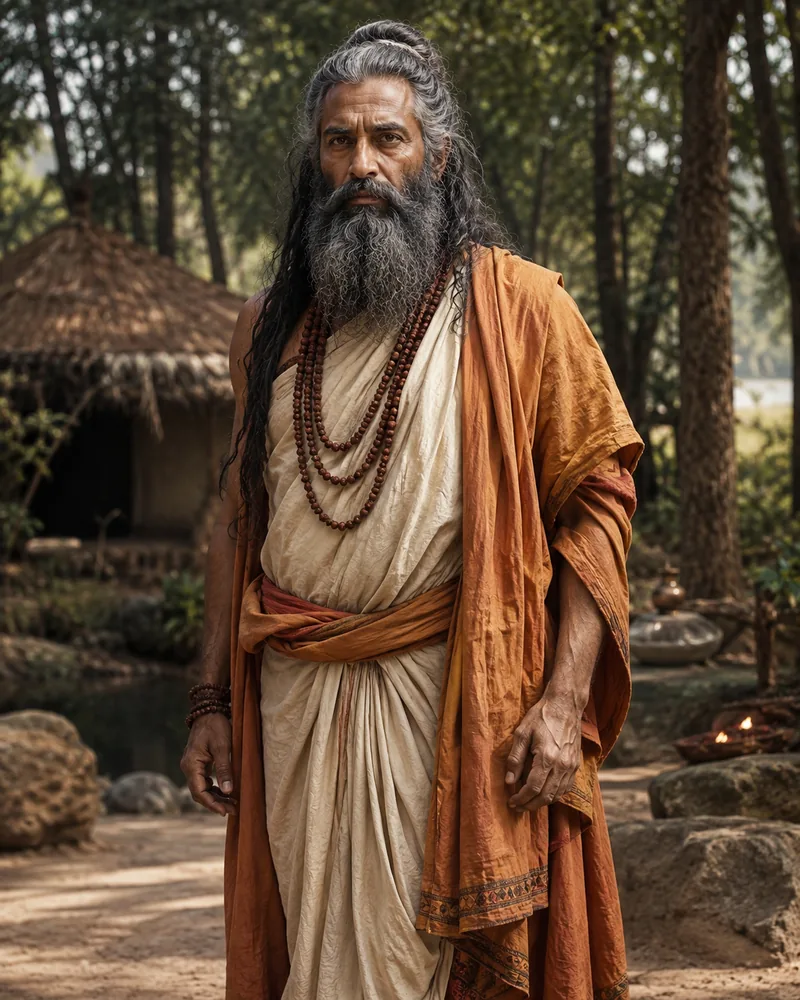
Vyasa is born to Satyavati and Parashara. Later, the Adi Parva places him at a crisis in Kuru succession: he becomes the father of Dhritarashtra, Pandu and Vidura. The two rival branches of the family therefore belong to a history with which the sage himself is intimately connected.
The epic does not ask us to imagine that closeness makes the tale simple or impartial in a modern journalistic sense. Instead it repeatedly allows characters to remember, argue and grieve from within the family. Vyasa's presence reminds us that the war is an inherited human tragedy, not merely a contest of famous warriors.
02
How a story becomes a public memory
In the epic's frame, Vyasa teaches the story to his pupil Vaishampayana. Vaishampayana recites it at a sacrifice held by King Janamejaya, a descendant of the very family being remembered. Other narrative frames surround that recital. Hearing an account of ancestors through several voices is part of the Mahabharata's design.
This matters when two people describe the same event differently. The audience is invited to weigh testimony, motive and consequence. A cinematic retelling can make the sequence easier to follow, but it cannot flatten the epic's many voices into one unquestioned verdict.
03
Where to begin reading
Begin with the Adi Parva's family origins, then follow the dice hall, forest years and failed peace effort before the battlefield. Knowing the relationships first makes Arjuna's hesitation, Draupadi's question and Vidura's warnings much more intelligible.