01
The inner conflict
Bhishma gives up crown, marriage and personal ambition to protect his father's happiness. The same vow that makes him legendary later binds his wisdom to a throne he knows is being misused.
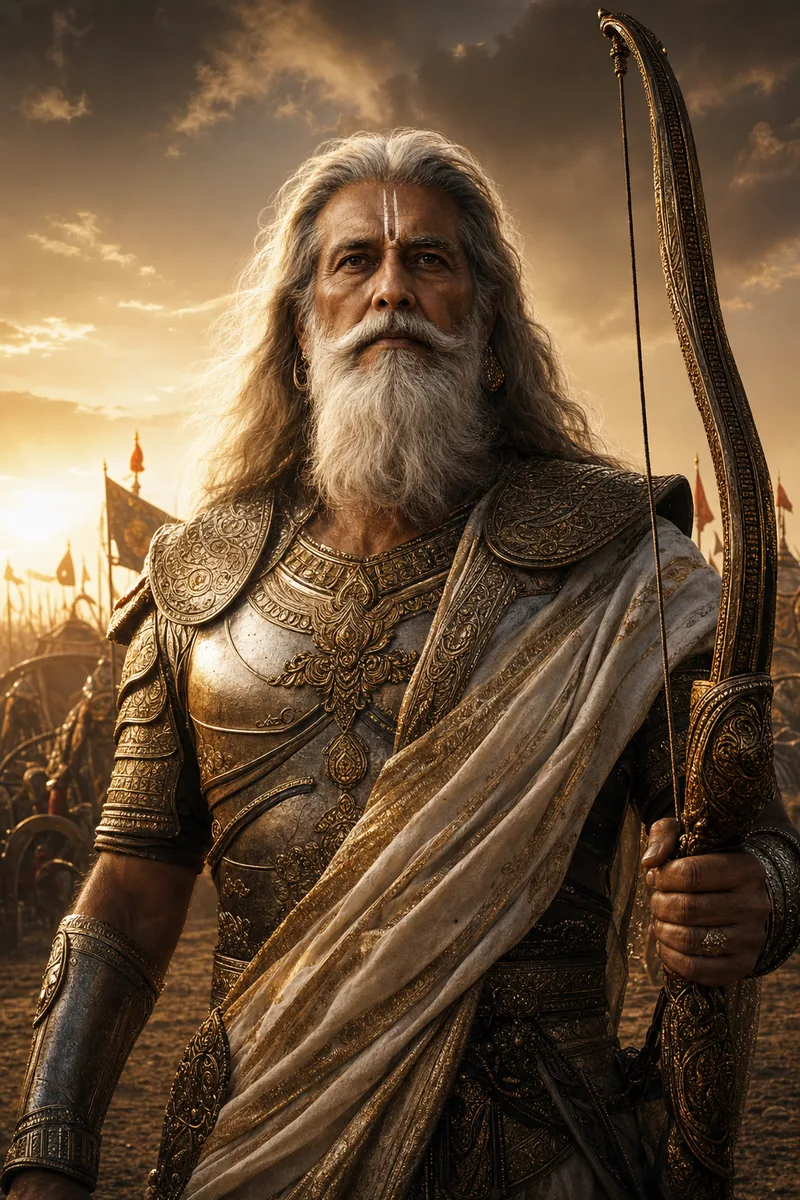

Mahabharata · Kuru patriarch and commander
The guardian imprisoned by his vow
Grand patriarch bound by a terrible vow, revered for wisdom yet trapped in loyalty to the throne.
The question beneath the legend
When does loyalty to an institution become complicity in its failure?
Beyond the familiar story
Bhishma gives up crown, marriage and personal ambition to protect his father's happiness. The same vow that makes him legendary later binds his wisdom to a throne he knows is being misused.
Sacrifice is not automatically righteous forever. A noble promise must still be examined when its consequences begin protecting injustice.
In the dice hall, the elder whose authority could change the room recognizes the moral crisis but remains constrained by law, allegiance and his own lifelong vow.
A living legacy
Bhishma remains both revered teacher and tragic warning: moral knowledge loses force when duty is separated from the courage to intervene.
Bhishma is grand patriarch bound by a terrible vow, revered for wisdom yet trapped in loyalty to the throne. Son of King Shantanu and the river goddess Ganga; born Devavrata.
He renounced the throne and marriage so his father could wed Satyavati, earning the name Bhishma.
He protected generations of the Kuru dynasty, trained princes and tried to preserve the kingdom through repeated crises.
Though he condemned Draupadi's humiliation and Duryodhana's conduct, his vow kept him on the Kaurava side.
Shikhandi's presence allowed Arjuna to bring him down; he taught Yudhishthira from a bed of arrows before choosing death.
He renounced the throne and marriage so his father could wed Satyavati, earning the name Bhishma.
He protected generations of the Kuru dynasty, trained princes and tried to preserve the kingdom through repeated crises.
Though he condemned Draupadi's humiliation and Duryodhana's conduct, his vow kept him on the Kaurava side.
Shikhandi's presence allowed Arjuna to bring him down; he taught Yudhishthira from a bed of arrows before choosing death.
Lives in constellation
A vow can be noble at birth yet harmful when it prevents moral action.